
Blogs
Algorithmic Trading Risk Parameters: How to Set Them
Nick Garidzhuk
Setting Algorithmic Risk Parameters Effectively
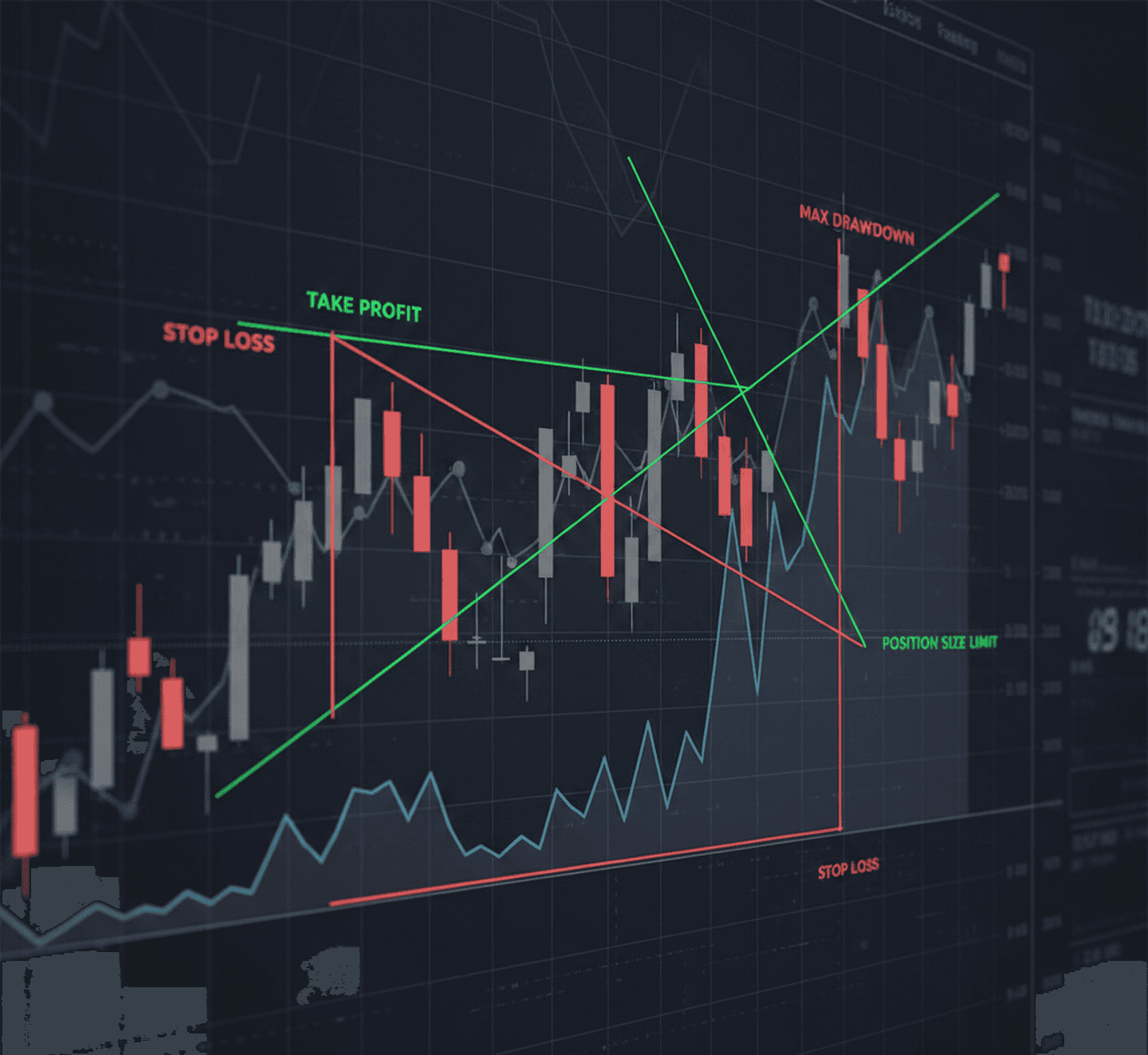
Algorithmic risk parameters are the predefined rules and limits that control how much capital an algorithmic trading system can risk on any single trade, position, or portfolio. Proper risk parameterization is what separates profitable algorithmic traders from those who blow up their accounts — studies consistently show that risk management accounts for more of a strategy's long-term success than entry signals alone. This guide covers the essential risk parameters every algorithmic trader should configure, from stop-loss levels and position sizing to maximum drawdown limits.
Why Algorithmic Risk Management Matters
Most trading algorithms do not fail because they cannot detect valid buy or sell signals. Traders fail when they allow risk exposure to remain unregulated. Without proper parameters, an algorithm can accumulate losses rapidly, amplify volatility, or behave unpredictably under stress.
Strong risk controls:
Protect capital during losing streaks
Prevent emotional decision-making
enforce consistent behavior across market conditions
Allow an algorithmic edge to play out over the long term
Reduce vulnerability to high-risk and systemic risks
Effective risk management is the foundation that keeps both short term and long term strategies stable.
Core Principles for Setting Risk Parameters
Before deploying any strategy, traders and quants must determine the acceptable level of risk at both the trade and portfolio level. These parameters drive all downstream components, including position sizing, stop-loss placement, and execution logic.
1. Risk Per Trade: Percentage vs. Fixed Dollar
Two common approaches define the maximum loss for any single trade:
Percentage-Based Risk
A fixed percentage of account equity is risked on each trade.
Example: 1% risk on a $10,000 account = $100 per trade.
As the account changes, the dollar value adjusts automatically. Traders prefer this approach because it controls exposure as volatility shifts.
Fixed Dollar Risk
A constant dollar amount is risked per trade, regardless of account size.
This method is simpler but does not adapt to growth or drawdowns.
2. Position Sizing Based on Stop-Loss Distance
Professional risk frameworks link trade size to stop-loss distance.
The wider the stop, the smaller the position; the tighter the stop, the larger the position.
Formula:
Position Size = Risk Amount ÷ Stop-Loss Distance
This ensures that each position matches the planned risk, regardless of market conditions.
Tight stops, while appealing, often lead to premature exits caused by normal price noise. For this reason, many systems also use a minimum stop-loss distance, calculated using volatility indicators or ATR values.
Implementing Risk Parameters in an Algorithmic System
Risk rules should not remain conceptual—they must be coded directly into the algorithm.
A typical sequence includes:
Signal detection using technical analysis or model logic
Stop-loss placement at a volatility-adjusted level
Risk amount calculation based on account parameters
Position-size calculation using the risk formula
Validation checks, such as minimum stop-loss distance
Risk-reward ratio assignment (e.g., 2:1 target)
These steps ensure every order follows the same disciplined risk structure, independent of human emotions or discretion.
Platforms such as Nvestiq now allow traders to create these logical structures using natural language, eliminating the need for manual coding while still enabling precise control over risk parameters.
Backtesting With Risk in Mind
Effective backtesting is not limited to profit evaluation. A reliable risk assessment includes:
maximum drawdown
average loss per trade
frequency of risk-limit breaches
distribution of winning vs. losing trades
short term and long term volatility behavior
impact assessments under different market conditions
Algorithms must be tested on years of historical data to reveal weaknesses, confirm resilience, and validate whether the risk parameters produce stable performance.
Selecting an Appropriate Risk-Reward Ratio
The risk-reward ratio determines how much profit a system aims to capture relative to the loss it is willing to take.
Common ratios:
1:1 (balanced)
2:1 (target is twice the risk)
Strategies with a higher average win than average loss tend to perform better over time, even with modest win rates.
Simulation studies show that increasing the ratio from 1:1 to 1.5:1 or 2:1 significantly improves long-term survival and profitability.
Managing Portfolio-Level and Daily Risk
When running multiple strategies or trading several assets, the risk of compounding losses increases.
To mitigate this, many traders set:
daily loss limits
max number of trades per day
portfolio-wide exposure limits
Example:
A $50,000 account may halt trading for the day if losses reach $1,000.
Brokerage platforms often provide tools such as:
auto-liquidation thresholds
trading-hour restrictions
asset-blocking settings
maximum drawdown rules
These safeguards prevent catastrophic losses during extreme market events.
Data-Driven Optimization of Risk Parameters
Modern risk management relies on statistical analysis rather than intuition.
Data sources such as historical volatility, return distributions, and asset-specific behaviors inform more accurate parameter selection.
Useful analyses include:
historical drawdown studies
volatility clustering patterns
ATR-based stop-loss modeling
return distribution curves
sensitivity testing (changing one parameter at a time)
Different assets behave differently—high-volatility stocks, currency pairs, and crypto instruments require unique risk settings.
Traders must tune risk parameters for each instrument instead of copying them across markets
Common Risk Management Errors
Frequent mistakes include:
risking too much per trade
ignoring volatility when placing stops
overtrading during high-risk sessions
assuming one set of parameters fits all markets
ignoring commissions, spread, or slippage
relying on high-risk strategies without mitigation
Even strong strategies can fail when paired with improper risk parameters.
Final Thoughts
In algorithmic trading, a strong strategy relies not only on its signals but also on the quality of its risk management
Accurate and consistent risk parameters based on data improve stability. They reduce emotional interference and help algorithms perform well in both short-term and long-term markets.
Mastering risk is not optional. The foundation allows any trading strategy to survive, adapt, and thrive within complex financial markets.
If used carefully, the ideas in this guide can improve decision-making for any algorithmic system. They can also boost performance and safety in many trading situations.