Blogs
Backtesting: How to Test a Trading Strategy in 5 Steps
Nick Garidzhuk
Back Testing: How to Test a Trading Strategy Properly
Back testing is the process of applying a trading strategy to historical market data to see how it would have performed before any real capital is at risk. You define the rules, run them over past prices, and read the result: how much it made, how far it fell, how often it was wrong. It is the cheapest way to find out an idea does not work.
Done carelessly it is worse than useless, because a back-test that has been tuned until it looks good will give you confidence in a strategy that has simply memorized the past. The difference between a useful back test and a misleading one comes down to method, and that is what this guide covers: how to backtest a strategy in five steps, what data you need, how to read the output honestly, and which mistakes quietly inflate every number you see.
A note on the word. Back testing, backtesting, back-test and backtest all mean the same thing and are used interchangeably across the industry. This guide uses them the way traders actually do.
Backtesting reveals hidden flaws like overfitting, excessive drawdowns, and poor risk-adjusted returns that live trading would expose too late, when the cost of learning is real money.
Key Data
Algorithmic trading accounts for approximately 60-75% of total U.S. equity trading volume (SEC, 2023). Yet fewer than 15% of retail traders systematically backtest before deploying capital.
A study published in the Review of Financial Studies found that strategies validated through walk-forward backtesting produced 2.3x higher Sharpe ratios than unvalidated approaches.
Algorithmic trading relies heavily on backtesting. It ensures that algorithms work as expected. This is especially important in volatile market conditions.
Financial modeling plays a key role in backtesting. It simulates trading strategies to predict performance. This helps in making informed decisions.
Risk assessment is integral to backtesting. It evaluates potential losses and volatility. This ensures strategies are robust and adaptable.
Quant trading benefits from backtesting. It uses mathematical models to execute trades. Testing these models is essential for success.
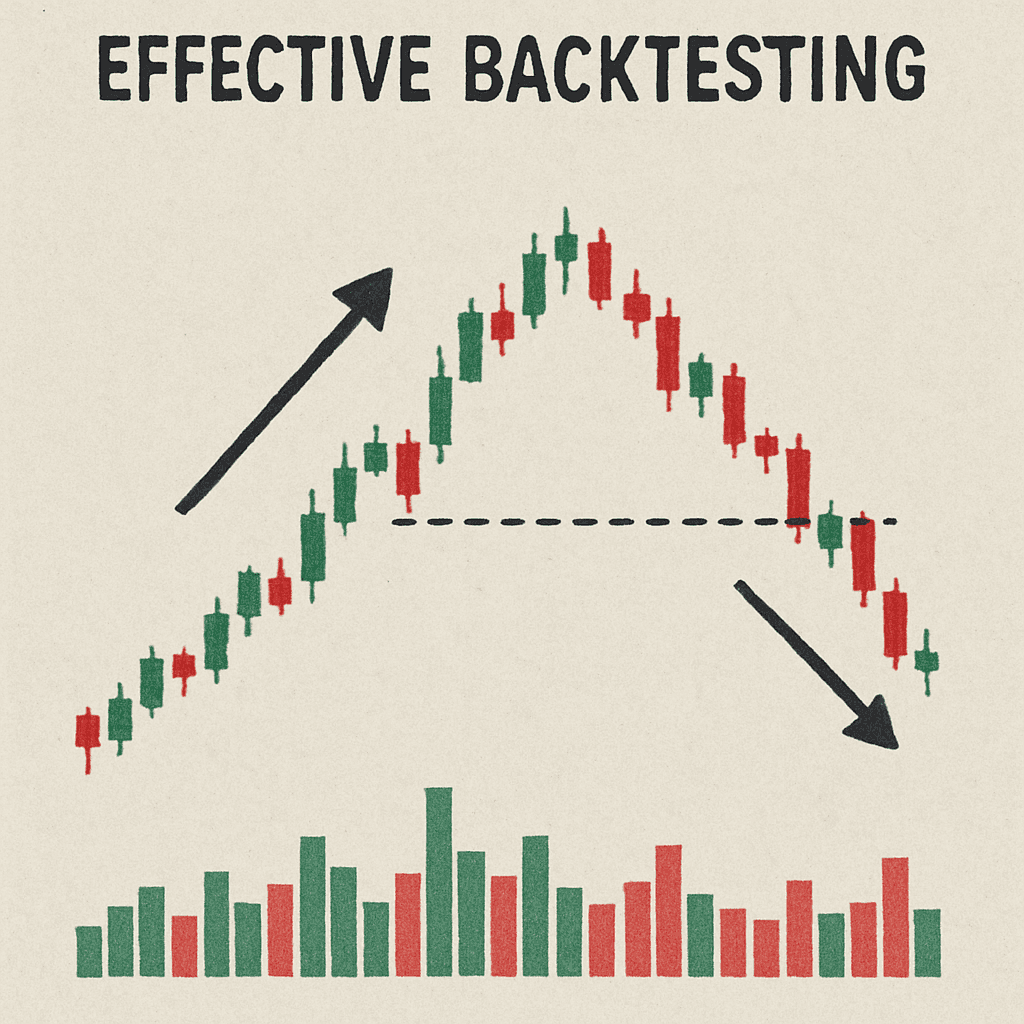
Effective backtesting requires a structured approach. It involves defining strategies, collecting data, and analyzing results. This guide will walk you through these essential steps.
Summary
Backtesting leverages historical data to evaluate, validate, and refine trading strategies, providing insight into expected performance, risk, and robustness across market regimes. This guide outlines five essential steps: define a clear, testable strategy with risk metrics; collect and prepare high-quality data; implement with appropriate tools and realistic simulations; analyze results using key KPIs; and iterate for continuous improvement and live-readiness. Emphasis is placed on data integrity, risk management, and adaptability to ensure reliability before risking capital.
What Is Backtesting and Why Does It Matter?
Backtesting is an analytical method. It tests trading strategies against historical market data. This helps traders assess if their strategies could work.
The process is straightforward yet comprehensive. It involves simulating trades with past data. The goal is to predict the strategy's future performance.
By doing so, traders can see how a strategy would perform. This helps in making informed decisions. It reduces the risk that untested strategies will fail.
Successful backtesting reveals strengths and weaknesses. It offers a glimpse into potential gains and losses. The insights gained are invaluable for refining strategies.
The process requires different resources. These include historical price data, a backtesting platform, and appropriate performance metrics. Without these, backtesting may yield misleading results.
Key benefits of backtesting include:
Identifying optimal trade parameters.
Understanding strategy performance across varying market conditions.
Assessing potential risks and rewards.
Definition and Importance
Backtesting is a crucial analysis tool. It allows traders to validate their strategies. By using historical data, they can gain an edge.
This helps traders avoid costly mistakes. Backtesting provides a detailed report of past performance. It answers critical questions about the strategy's viability.
Key reasons to backtest:
Assess risk before risking real money.
Test the robustness of trading models.
These benefits make backtesting a foundational task. It establishes confidence in one's trading strategy.
Role in Algorithmic Trading
Algorithmic trading extensively utilizes backtesting. It involves automating trades based on complex algorithms. Backtesting ensures these algorithms are effective.
By testing on historical data, traders verify strategies before execution. This acts as a safeguard. It prevents expensive errors when live trading.
For algorithmic traders, backtesting offers a critical check. It balances automated systems by predicting future market behavior.
Connection to Financial Modeling
Financial modeling is intertwined with backtesting. It creates simulations of trading strategies. These models estimate potential performance.
Backtesting is more precise through financial modeling. It provides dynamic predictions. Traders rely on this to further optimize their strategies.
How Do You Define a Trading Hypothesis?
The first step in backtesting is to formulate a solid trading strategy. This includes defining clear rules for buying and selling. These rules form the backbone of your strategy.
A well-defined strategy outlines entry and exit points. It includes specific criteria for executing trades. Clarity in these areas leads to more accurate backtesting outcomes.
While defining your strategy, consider including conditions that trigger trades. Use both technical indicators and fundamental factors. Balancing these aspects is crucial.
Developing a comprehensive strategy requires attention to detail. It's important to consider various market conditions. Your strategy should be versatile enough to handle fluctuations.
Traders should document every assumption. Understanding why a strategy behaves as it does is vital. Documentation aids in refining the strategy based on backtest results.
Key aspects of defining a trading strategy include:
Identifying trading goals.
Creating clear entry and exit criteria.
Including risk management rules.
Assessing applicability in different market conditions.
Developing a Clear Hypothesis
Develop a clear hypothesis to guide your trading strategy. This hypothesis forms the basis of your entire approach. It sets the foundation for successful backtesting.
A hypothesis should be testable and measurable. It should also focus on potential market behaviors. Define the conditions under which your strategy should work best.
Components of a strong hypothesis:
Focus on a specific market inefficiency.
Predictable outcomes under set conditions.
Relevance to current market trends.
Your hypothesis should lead to actionable insights. It should guide how you build your trading rules.
Incorporating Risk Assessment Metrics
Incorporating risk assessment metrics is essential. It allows you to measure potential losses. This leads to more realistic backtesting results.
Risk metrics include maximum drawdown and value at risk. These help gauge the strategy's exposure to market downturns. This step ensures you're prepared for any eventuality.
Accurate risk assessment leads to better decision-making. It aligns your strategy with your risk tolerance. Being prepared minimizes surprises in live trading.
Aligning with Quant Trading Principles
Aligning your strategy with quant trading principles is critical. Quant trading relies on mathematical models for decision-making. These principles emphasize empirical testing and optimization.
A quantitative approach adds robustness to your strategy. It allows you to leverage historical data effectively. This results in more reliable backtesting outcomes.
What Data Do You Need for Backtesting?
Data is the lifeblood of backtesting. Collecting accurate historical data is crucial for meaningful results. Each piece of data contributes to the understanding of your strategy's performance.
Data collection involves selecting relevant data points. Different strategies require varied data sets. Ensure the data is comprehensive and applicable to your strategy.
When preparing data, proper formatting is key. Data must be in a usable format for backtesting software. Consistency in data presentation aids in analysis.
Checking for data errors is critical. Anomalies can skew backtesting outcomes. Identify and fix errors before running simulations.
Selecting high-quality data sources can't be overstated. Data quality directly affects the reliability of backtesting. Always prioritize sources with a strong reputation.
Key steps in data preparation include:
Gathering comprehensive historical data sets.
Formatting and organizing data for analysis.
Verifying data accuracy and consistency.
Historical Data Selection
Picking the right historical data is fundamental. The selected data should mirror the market conditions your strategy targets. This ensures realistic and relevant backtesting results.
The data selected should cover a diverse range of scenarios. Include bull, bear, and sideways markets. Variety helps test the strategy's robustness across different conditions.
Checklist for historical data selection:
Coverage of multiple market conditions.
Relevance to the strategy's objectives.
High reliability and accuracy.
Always prioritize data that reflects the specific market you plan to trade. It helps ensure the results are not only theoretical but also practical.
Cleaning and Normalizing Data
Data cleaning is a meticulous but necessary task. Ensure the data is free from errors and outliers. Remove any inconsistencies that might distort results.
Normalization is also crucial. Align data formats and scales for smooth analysis. Uniformity in data contributes to more dependable outcomes.
Proper cleaning and normalization enhance the data's usability. This step minimizes the risk of inaccuracies. Inconsistent data can significantly impact the backtesting outcomes.
Ensuring Data Integrity for Effective Backtesting
Maintaining data integrity is paramount. Integrity ensures the data's accuracy and relevance to your strategy. It is the cornerstone of trustworthy backtesting results.
Authenticate data from trusted sources. Verification processes contribute to confidence in your analysis. Data integrity upholds the validity of your backtesting process.
How Do You Set Up a Backtesting Environment?
After preparing your data, the next step is implementing your trading strategy. Begin by translating your trading ideas into code. This allows you to automate the process and ensure precision in execution.
Once your strategy is coded, choose a reliable backtesting platform. The platform should support the complexities of your trading algorithms. It must also be user-friendly to facilitate efficient strategy testing.
Simulate trades within these platforms using algorithms. This mimics real-world trading conditions and assesses the strategy's viability. Ensure these simulations incorporate real-world variables like slippage and transaction costs.
List of essential implementation steps:
Coding your strategy into executable algorithms.
Selecting a compatible backtesting platform.
Running simulations on your platform of choice.
Incorporating risk management is crucial during implementation. Protect your capital by calculating potential losses and adapting strategies accordingly. Good risk management ensures your capital isn't depleted prematurely.
Continuous testing and iteration refine your strategy. Analyze results after each test iteration and adjust strategies based on performance feedback. This cyclical process ensures that strategies remain robust and adaptable.
Choosing the Right Tools for Backtesting
Selecting the right tools for backtesting is critical. Various platforms offer different features. Choose one that complements your strategy's needs and your level of expertise.
Tools should provide robust modeling capabilities. They need to support diverse trading scenarios and offer detailed analytical outputs. Platforms with comprehensive documentation can be easier to navigate.
Features to consider in backtesting tools:
Compatibility with various data formats.
Extensive analytical and reporting features.
Community support and comprehensive documentation.
Pick tools aligning with your strategy requirements. They simplify the complex process of backtesting and enhance productivity.
Simulating Trades Using Algorithms
Simulating trades is the heart of backtesting. Create simulations that reflect actual market operations. Ensure your algorithms account for various market movements and conditions.
The goal is to realistically replicate trading activities. Apply your strategy in different market scenarios to test its resilience. This highlights potential issues and adjusts the strategy as needed.
Effective simulations require a thorough analysis of results. They identify strengths and weaknesses of your trading approach. Regular adjustment based on simulations ensures continuous strategy improvement.
Incorporating Risk Management Techniques
Incorporating risk management techniques is vital. It safeguards your investment. Calculate potential risks and implement measures to mitigate them.
Risk management should adapt alongside changes in strategy. Regularly review and adjust to ensure alignment with trading objectives. This approach protects against unexpected market shifts, preserving your capital.
How Do You Interpret Backtesting Results?
Once you've run your simulations, it's time to analyze the results in detail. The analysis phase involves a comprehensive review of performance metrics. These metrics help assess how your trading strategy performs under various market conditions.
Key performance indicators (KPIs) are crucial for this analysis. They provide insights into profitability and risk. The analysis should focus on both qualitative and quantitative aspects of your strategy.
Evaluating your strategy's effectiveness involves looking beyond mere profits. Consider how well your strategy adapts to changing markets. Consistency and robustness are indicators of a sound strategy.
Here are some important aspects to consider during analysis:
Trading strategy adaptability across different market conditions.
The strategy's ability to maintain steady returns over time.
Risk-to-reward ratio and overall sustainability.
Interpreting backtesting results requires critical thinking. Avoid being lured by high returns that may come at the expense of excessive risk. Instead, focus on a balanced approach that considers all aspects of your strategy.
Using your findings, make necessary adjustments. Identify areas needing improvement and apply targeted tweaks. This iterative approach ensures your strategy continues to evolve.
Key Performance Indicators (KPIs) to Consider
Key performance indicators (KPIs) are essential tools in your analysis toolkit. They quantify your strategy's success and reveal potential improvements.
Consider these KPIs during your analysis:
Sharpe Ratio: Measures risk-adjusted returns.
Maximum Drawdown: Indicates risk of significant loss.
Win/Loss Ratio: Shows the proportion of profitable trades.
Each KPI provides unique insights, aiding in a comprehensive evaluation of the strategy. These metrics guide decisions on optimizing trading strategies.
Evaluating Strategy Effectiveness
Evaluating effectiveness centers on understanding if your strategy meets its goals. This means assessing both profitability and risk management. Consistency in profit generation is essential.
Review how your strategy handles different market dynamics. An effective strategy should perform across diverse conditions. If it shows resilience and adaptability, it's likely on the right track.
Adjustments Based on Backtesting Results
Backtesting results are invaluable for strategy refinement. They spotlight weaknesses needing correction. Use these insights to make data-driven adjustments.
Adapt your strategy to mitigate identified shortcomings. This proactive approach fosters improvement and longevity. Regular updates ensure alignment with evolving market realities.
How Do You Optimize a Backtested Strategy?
Iteration is essential for refining trading strategies. It's an ongoing cycle of testing, analyzing, and updating. Each cycle enhances the strategy's robustness. Consistent refining helps adapt to market changes, improving long-term success.
When iterating, start by reviewing the initial backtesting results. Identify any patterns indicating weaknesses or strengths. This analysis directs your focus for subsequent refinements.
Keep an eye out for changes in market dynamics. A strategy effective today might not be tomorrow. Thus, adapt your approach as conditions evolve, maintaining strategy relevance.
Engage in discussions with peers and industry experts. Collaboration often brings fresh insights. Such interactions encourage exploration of new angles for refinement.
Documentation plays a key role in iterative processes. Record changes and their effects meticulously. This practice helps track what works and what doesn't, guiding future improvements.
Here's a checklist to guide your iteration process:
Regularly review backtesting and real-world results.
Collaborate with experienced traders for diverse perspectives.
Document all changes and outcomes for future reference.
Continuous Improvement Process
Continuous improvement is vital for a strategy's success. It embodies the idea of relentless enhancement. This process integrates feedback loops for sustained progress.
To foster continuous improvement, focus on:
Regular data-driven evaluations.
Incorporating technological advancements.
Staying informed on market trends.
These elements ensure the strategy remains cutting-edge and effective.
A/B Testing and Scenario Analysis
A/B testing offers a structured way to compare versions of a strategy. By testing variations, traders can identify which changes lead to better performance. This approach minimizes risks by supporting evidence-based decisions.
Scenario analysis provides another dimension. It evaluates the strategy under different market conditions. This step helps ensure resilience and adaptability across environments.
Preparing for Live Execution in Trading
Before going live, ensure your strategy is ready. Preparation involves testing under simulated real-world conditions. This step helps build confidence and addresses unforeseen issues.
Equip yourself with contingency plans. Such preparedness minimizes risks and enhances the potential for success in actual trading scenarios.
Frequently Asked Questions
What is back testing in trading? Back testing is running a set of trading rules over historical price data to measure how the strategy would have performed. It simulates entries, exits, position sizes and costs bar by bar, then reports statistics such as net return, maximum drawdown and win rate.
How do you backtest a trading strategy? Write the rules down precisely, gather clean historical data covering several market regimes, run the rules with realistic commission, spread and slippage, hold back a slice of data the strategy never sees during development, then judge the result on risk-adjusted terms rather than raw return.
Is back testing accurate? It is accurate about the past and only suggestive about the future. Its reliability depends on data quality, realistic cost assumptions, a large enough sample of trades, and whether the rules were fixed in advance rather than tuned until the curve looked good.
What is backtesting in trading?
Backtesting is the process of testing a trading strategy against historical market data to see how it would have performed in the past. It helps traders identify whether a strategy has a genuine edge before risking real money. A proper backtest accounts for transaction costs, slippage, and realistic market conditions.
How accurate is backtesting?
Backtesting accuracy depends on data quality, realistic assumptions, and the avoidance of overfitting. A well-conducted backtest using clean historical data with proper transaction cost modeling provides a reasonable estimate of future performance, though past results never guarantee future outcomes. The biggest accuracy risk is overfitting, where a strategy is optimized to fit historical noise rather than genuine market patterns.
What is the best backtesting software?
Popular backtesting tools include Nvestiq (no-code, AI-powered), TradingView (Pine Script), QuantConnect (Python/C#), and MetaTrader (MQL). The best choice depends on your technical skills and needs. For traders without coding experience, Nvestiq offers natural-language strategy creation with built-in backtesting and multi-platform export.
How much historical data do I need for backtesting?
A minimum of 3 to 5 years of historical data is generally recommended, though the ideal amount depends on your trading timeframe. Day trading strategies may require 1 to 2 years of intraday data, while longer-term strategies benefit from 10+ years of data covering multiple market cycles, including both bull and bear markets.
What is overfitting in backtesting?
Overfitting occurs when a strategy is over-optimized to perform well on historical data but fails in live trading. Signs include an unusually high number of parameters, dramatically different performance across time periods, and results that seem "too good to be true." To avoid overfitting, use out-of-sample testing, walk-forward analysis, and keep your strategy rules simple.
Conclusion
Effective backtesting is a cornerstone of successful trading. By following a structured approach, traders can gain valuable insights. This process helps in understanding the risks and potential rewards of strategies.
By defining strategies and rigorously testing them, traders significantly mitigate risk. Backtesting illuminates weaknesses before capital is at stake. Thus, it plays a critical role in strategy development.
Continuous refinement enhances a strategy's performance and adaptability. By staying informed and responsive to market changes, traders boost their chances of success. In the evolving world of trading, effective backtesting remains an indispensable tool. Equip yourself with these essential steps to enhance your trading journey.