
Blogs
Spot trading opportunities efficiently: proven strategies 2026
Aman Anand
Spot trading opportunities efficiently: proven strategies 2026

Every active trader has faced the frustration of identifying promising setups too late or missing profitable moves entirely. The difference between consistent success and random outcomes often lies in a systematic, evidence-based approach to identifying trading opportunities. This comprehensive guide teaches you how to integrate price action patterns, volume analysis, market breadth indicators, newsflow context, trend alignment, and pairs trading into a cohesive framework. You’ll learn actionable strategies that transform market noise into clear, tradable signals, helping you make confident decisions backed by data and proven analytical methods.
Table of Contents
Execute Trades With Trend Alignment And Pairs Trading Strategies
Verify And Refine Your Trading Strategy With Backtesting And Risk Management
Key takeaways
Point | Details |
|---|---|
Price action patterns reveal crowd behavior | Patterns must form at meaningful locations with clear structure to be tradable, not just recognizable shapes. |
Combining multiple market dimensions improves accuracy | Integrating price, volume, breadth, and newsflow provides a fuller picture without overfitting to any single indicator. |
Define your tradable universe before market open | Filtering stocks by volume, liquidity, and optionability focuses attention on actionable opportunities. |
Trade with the dominant trend | Aligning positions with the prevailing market direction significantly improves probability of success. |
Pairs trading exploits mean reversion | Long-short positions on correlated stocks reduce directional risk while capturing arbitrage opportunities. |
Set up your trading universe and tools
Defining a tradable universe before the open is essential for active traders, allowing you to focus energy on stocks with genuine potential rather than scanning thousands of tickers randomly. Your universe should include only securities that meet specific liquidity and structural criteria to support efficient execution and risk management.
Start by filtering for stocks listed on major exchanges with average daily volume of at least 1 million shares. This threshold ensures sufficient liquidity to enter and exit positions without significant slippage. Price range matters too: stocks trading between $10 and $500 typically offer the best balance of volatility and institutional participation. Optionability is crucial if you plan to use derivatives for hedging or income generation, so verify that liquid options markets exist for your candidates.
Organize your filtered universe into watchlists categorized by sector, market cap, or trading style. Set price alerts at key technical levels like recent swing highs, lows, and round numbers where institutional activity often clusters. This preparation transforms reactive scanning into proactive monitoring, letting you anticipate setups rather than chase them.
Criterion | Specification | Rationale |
|---|---|---|
Exchange listing | Major exchanges (NYSE, NASDAQ) | Regulatory oversight and transparency |
Average daily volume | Minimum 1 million shares | Ensures liquidity for execution |
Price range | $10 to $500 | Balances volatility and institutional interest |
Optionability | Liquid options market | Enables hedging and income strategies |
Market cap | Varies by strategy | Larger caps for stability, smaller for growth |
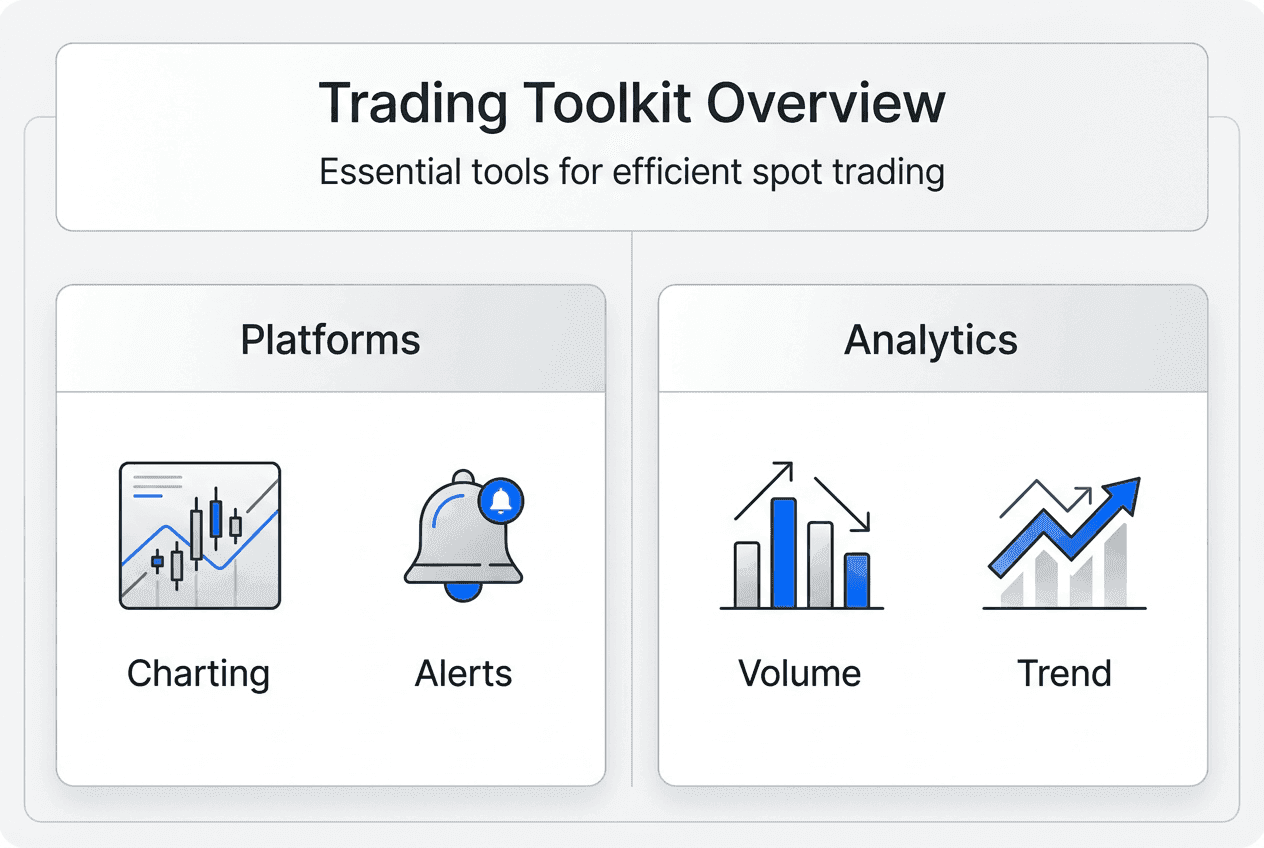
Your analytical toolkit should center on charting platforms with robust price action visualization, volume profiles, and breadth indicators like advance-decline lines and new highs-lows. Integrate a real-time newsfeed to contextualize sudden price movements with earnings releases, regulatory changes, or macroeconomic events. The goal is not to drown in data but to have the right information at your fingertips when patterns emerge.
Pro Tip: Review and adjust your tradable universe quarterly based on changing market conditions, your available capital, and evolving trading goals. What works in a bull market may require different criteria during consolidation or bear phases.
Explore comprehensive market analysis strategies for 2026 to refine how you evaluate and prioritize opportunities within your universe.
Identify tradable price action patterns and market signals
Price action trading patterns are footprints of buying and selling decisions appearing as swings, ranges, breakouts, rejections, and trend continuations. These formations reveal the psychology of market participants, showing where buyers gain control, sellers capitulate, or equilibrium forms. Recognizing these patterns is only half the battle; understanding which ones are tradable separates profitable setups from false signals.
A price action pattern becomes tradable when it meets three conditions: meaningful location, clear structure, and logical narrative. Meaningful location means the pattern forms at a price level that matters, such as a prior swing high, a round number, or a moving average. A clear structure indicates well-defined boundaries and decisive price movement, not ambiguous wiggles. Logical narrative connects the pattern to the current market context, answering why this setup makes sense now.
Common tradable patterns include:
Breakouts from consolidation ranges, especially when accompanied by expanding volume
Trend continuation pullbacks to moving averages or prior support in strong trends
Rejection candles at key resistance or support, showing failed attempts to breach levels
Swing highs and lows that define the rhythm of price movement and potential reversal zones
Volume is the confirmation layer that validates or negates price patterns. A breakout on declining volume suggests weak conviction and a higher probability of failure. Conversely, a pullback on light volume within an uptrend indicates healthy consolidation rather than reversal. Volume spikes at pattern completion points signal institutional participation and increase the likelihood of follow-through.
Combining price action, volume, breadth, and newsflow without overfitting creates a multi-dimensional view that reduces false positives. Market breadth indicators like the advance-decline line show whether rallies are broad-based or concentrated in a few names. Newsflow provides the fundamental catalyst that often triggers technical setups, such as earnings beats, FDA approvals, or sector rotation announcements.
Pro Tip: Focus on the logical story behind patterns rather than memorizing rigid shapes. Markets are dynamic, and patterns evolve. Ask yourself what the pattern reveals about current supply and demand dynamics, and whether that story aligns with broader market conditions.
Learn specific breakout strategies for successful trading to deepen your pattern recognition and execution skills.
Execute trades with trend alignment and pairs trading strategies
Trading in the direction of the dominant trend is a fundamental rule, with price above the 200-day simple moving average signaling long bias and below indicating short bias. This principle acknowledges that trends persist longer than most traders expect, and fighting the prevailing direction dramatically reduces your probability of success. Aligning your trades with the trend doesn’t guarantee wins, but it stacks the odds in your favor.

Determine the dominant trend by analyzing multiple timeframes. On daily charts, observe the relationship between price and the 200-day SMA. On shorter timeframes, use the 50-period and 20-period moving averages to identify intermediate and short-term trend direction. When all timeframes align, you have the strongest conviction for trend-following trades. When they diverge, wait for clarity or consider mean-reversion setups instead.
Pairs trading strategies capitalize on the mean-reverting behavior of economically linked stocks, offering a market-neutral approach that profits from temporary divergences. This strategy involves simultaneously taking a long position in one stock and a short position in a correlated counterpart, betting that their price relationship will return to historical norms.
To implement pairs trading effectively:
Identify pairs with strong historical correlation, typically above 0.7, within the same sector or value chain.
Calculate the spread between the two stocks using price ratios or dollar differences.
Monitor the spread for deviations beyond two standard deviations from the mean.
Execute the trade by going long the underperformer and short the outperformer when the spread widens.
Set exit targets when the spread reverts to the mean or reaches predetermined profit levels.
Implement stop losses if the spread continues diverging beyond acceptable risk thresholds.
Feature | Trend Following | Pairs Trading |
|---|---|---|
Market exposure | Directional (long or short) | Market neutral (long-short) |
Profit driver | Sustained price movement | Mean reversion of spread |
Risk profile | Market direction risk | Correlation breakdown risk |
Ideal conditions | Strong trending markets | Range-bound or volatile markets |
Position duration | Days to weeks | Hours to days |
Pairs trading reduces exposure to broad market movements while capitalizing on relative value discrepancies. It works best when overall market volatility is high but individual stock movements are driven more by idiosyncratic factors than systematic trends. This approach also provides diversification benefits, as profits depend on relationship dynamics rather than absolute price direction.
Develop systematic approaches using a rule based trading strategy framework to codify your trend and pairs trading logic.
Verify and refine your trading strategy with backtesting and risk management
A strong backtest doesn’t automatically mean you have a strong strategy; professional quants use risk-adjusted metrics, robustness checks, and varied market condition testing to separate genuine edge from statistical noise. Backtesting alone can mislead because it’s easy to overfit historical data, creating strategies that performed brilliantly in the past but fail miserably in live markets.
Robust evaluation requires looking beyond simple profit and loss. Calculate the Sharpe ratio to understand return per unit of risk, with values above 1.0 indicating decent risk-adjusted performance and above 2.0 suggesting strong strategies. Maximum drawdown reveals the worst peak-to-trough decline, helping you assess whether you can psychologically and financially withstand the strategy’s losing streaks. Win rate and average win-to-loss ratio show whether your edge comes from high accuracy or asymmetric payoffs.
Metric | What It Measures | Good Benchmark |
|---|---|---|
Sharpe Ratio | Return per unit of risk | Above 1.5 |
Maximum Drawdown | Largest peak-to-trough loss | Below 20% of capital |
Win Rate | Percentage of winning trades | Context dependent (40-60%) |
Profit Factor | Gross profit divided by gross loss | Above 1.5 |
Recovery Factor | Net profit divided by max drawdown | Above 3.0 |
Out-of-sample testing is critical to validate that your strategy generalizes beyond the data used to develop it. Split your historical data into in-sample (for strategy development) and out-of-sample (for validation) periods. If performance degrades significantly out-of-sample, you’ve likely overfit. Stress testing across different market regimes, such as bull markets, bear markets, and high volatility periods, reveals whether your strategy adapts or breaks under varying conditions.
Use of ATR-based stops and position sizing aligned with your base currency is key for risk management. Average True Range (ATR) measures volatility, allowing you to set stop losses that give trades room to breathe without risking excessive capital. Position sizing based on ATR ensures that each trade risks a consistent percentage of your account, preventing any single loss from derailing your overall performance.
Risk management practices to implement:
Set stop losses at 1.5 to 2.0 times the ATR from your entry point
Risk no more than 1 to 2 percent of total capital on any single trade
Adjust position size inversely to volatility, taking smaller positions in higher ATR stocks
Use trailing stops to lock in profits as trades move in your favor
Maintain a maximum portfolio heat limit, capping total risk across all open positions
Pro Tip: Monitor live trades against backtest expectations and adjust methodically. If real results diverge significantly from simulated performance, investigate whether market conditions have changed, execution costs are higher than modeled, or psychological factors are affecting your discipline.
Master the principles of effective backtesting to build confidence in your strategies before committing real capital.
Discover no-code algorithmic trading with Nvestiq
Transforming the strategies covered in this guide into automated trading systems traditionally required coding expertise and significant technical infrastructure. Nvestiq changes that equation by enabling you to design, backtest, and deploy algorithmic trading strategies through an intuitive, no-code platform that comprehends the nuance of a real trader’s intuition.

Whether you’re implementing price action breakout systems, trend-following algorithms, or sophisticated pairs trading models, Nvestiq streamlines the entire workflow from concept to execution. The platform integrates the analytical tools and risk management principles discussed throughout this guide, allowing you to focus on strategy logic rather than programming syntax. Active traders and finance professionals gain the ability to rapidly test ideas, refine parameters, and validate performance across historical data, all within a unified environment designed specifically for systematic trading.
Explore how Nvestiq’s no-code algorithm platform empowers you to turn trading insights into quantifiable edge.
What are the key signs a price action pattern is tradable?
What are the key signs a price action pattern is tradable?
A tradable price action pattern must form at a meaningful price level, such as a prior swing high, support zone, or moving average confluence. The pattern should have clear structural boundaries with decisive price movement, not ambiguous or choppy action. Additionally, the setup must align with the current market narrative and be confirmed by volume and contextual factors like breadth or newsflow.
How does pairs trading reduce risk compared to traditional strategies?
Pairs trading creates a market-neutral position by simultaneously holding long and short positions in correlated stocks, which reduces exposure to broad market movements. This approach profits from temporary divergences in the relationship between two economically linked securities, relying on mean reversion rather than directional bets. By hedging out systematic risk, pairs trading can generate returns even when overall markets are flat or volatile.
Why is robust backtesting critical before using a new trading strategy?
Robust backtesting evaluates strategy performance across different market conditions and time periods, revealing whether the edge is genuine or the result of overfitting to historical data. It incorporates risk-adjusted metrics like Sharpe ratio and maximum drawdown to assess not just profitability but sustainability. Out-of-sample testing and stress scenarios provide confidence that the strategy will adapt to future market environments rather than failing when conditions change.
How often should I review and adjust my tradable universe?
Review your tradable universe quarterly or when significant market regime changes occur, such as shifts from trending to range-bound conditions. As your trading capital grows or shrinks, adjust criteria to maintain appropriate position sizing and risk management. Market dynamics evolve, so stocks that met your criteria six months ago may no longer offer the liquidity, volatility, or opportunity set you need today.
What role does volume play in confirming price action patterns?
Volume validates the conviction behind price movements, with expanding volume on breakouts indicating strong institutional participation and a higher probability of follow-through. Light volume during pullbacks within trends suggests healthy consolidation rather than reversal. Volume spikes at pattern completion points or key price levels signal that significant capital is entering or exiting, making the setup more reliable for trading decisions.
Can I combine trend following and pairs trading in the same portfolio?
Combining trend-following and pairs trading strategies creates diversification across different market conditions and profit drivers. Trend-following performs best in directional markets, while pairs trading excels during range-bound or high-correlation periods. Allocating capital to both approaches smooths overall portfolio returns and reduces dependence on any single market regime, improving risk-adjusted performance over time.