
Why Use Trading Platforms: Unlocking Quant Edge
Learn why trading platforms matter for quantitative traders. Get insights on platform types, automated features, psychological integration, and key risks.
Feb 5, 2026
Why Use Trading Platforms: Unlocking Quant Edge
Choosing the right trading platform often makes the difference between consistent growth and constant frustration for quantitative traders. The evolution of digital trading platforms allows aspiring and intermediate traders to access global markets, analyze real-time data, and automate decisions once made by instinct alone. This article breaks down the core roles, types, and innovative features these platforms offer, highlighting how psychological insights can be woven into powerful algorithmic strategies for smarter market performance.
Table of Contents
What Is A Trading Platform And Its Role
Major Types Of Trading Platforms Explained
Core Features: Automation And Analytics
Integrating Trader Intuition With Algorithms
Risks, Costs, And Common Pitfalls
Key Takeaways
Point | Details |
Importance of Trading Platforms | Trading platforms modernize investor interactions with financial markets, offering tools for ease and efficiency. |
Types of Trading Platforms | Different platform types cater to specific investor needs, ranging from retail to professional traders. |
Role of Automation and Analytics | Automation and advanced analytics enhance trading strategies and reduce emotional trading risks. |
Risks and Behavioral Factors | Understanding inherent risks and personal trading behaviors is crucial for effective risk management. |
What Is a Trading Platform and Its Role
A trading platform is a sophisticated digital gateway that revolutionizes how investors interact with financial markets. Modern trading platforms serve as comprehensive software systems that enable traders to execute transactions, analyze market data, and manage investment portfolios with unprecedented ease and efficiency.
These digital ecosystems provide traders with powerful features designed to streamline investment processes:
Real-time market data and quotes
Advanced charting and technical analysis tools
Order execution across multiple financial instruments
Portfolio management and tracking
Risk management capabilities
Educational resources and market insights
Trading platforms fundamentally transform traditional investment approaches by replacing manual, time-consuming processes with instantaneous digital transactions. Financial institutions offer these platforms to provide investors direct access to global markets, supporting everything from stock trades to complex derivative transactions.
The core purpose of these platforms extends beyond mere transaction execution. They democratize financial markets by providing retail and institutional investors with sophisticated tools previously accessible only to professional traders. Modern platforms break down geographical barriers, enabling investors worldwide to participate in markets with just an internet connection and a computer.
Pro tip: Always test a trading platform’s features using a demo account before committing real capital to understand its full functionality and user experience.
Major Types of Trading Platforms Explained
The world of trading platforms is diverse, with each type designed to meet specific investor needs and trading strategies. Various trading platforms have emerged to serve different market segments and trader requirements, offering unique capabilities for various investment approaches.
Here are the primary categories of trading platforms:
Online Brokerage Platforms:
Provide access to multiple asset classes
Suitable for retail investors
Offer user-friendly interfaces
Include research and educational resources
Direct Access Trading Platforms:
Designed for active and professional traders
Offer high-speed order execution
Advanced charting and real-time market data
Lower latency for rapid trading decisions
Peer-to-Peer Trading Platforms:
Facilitate direct trading between users
Primarily focused on cryptocurrency markets
Reduce intermediary costs
Enable decentralized transactions
Cryptocurrency Specialized Platforms:
Exclusively handle digital asset trading
Provide secure wallet integrations
Support multiple cryptocurrency exchanges
Offer advanced trading tools for crypto markets
Algorithmic trading platforms represent a cutting-edge category that leverages sophisticated computational strategies. These platforms enable traders to develop, test, and deploy automated trading algorithms without requiring extensive programming knowledge.
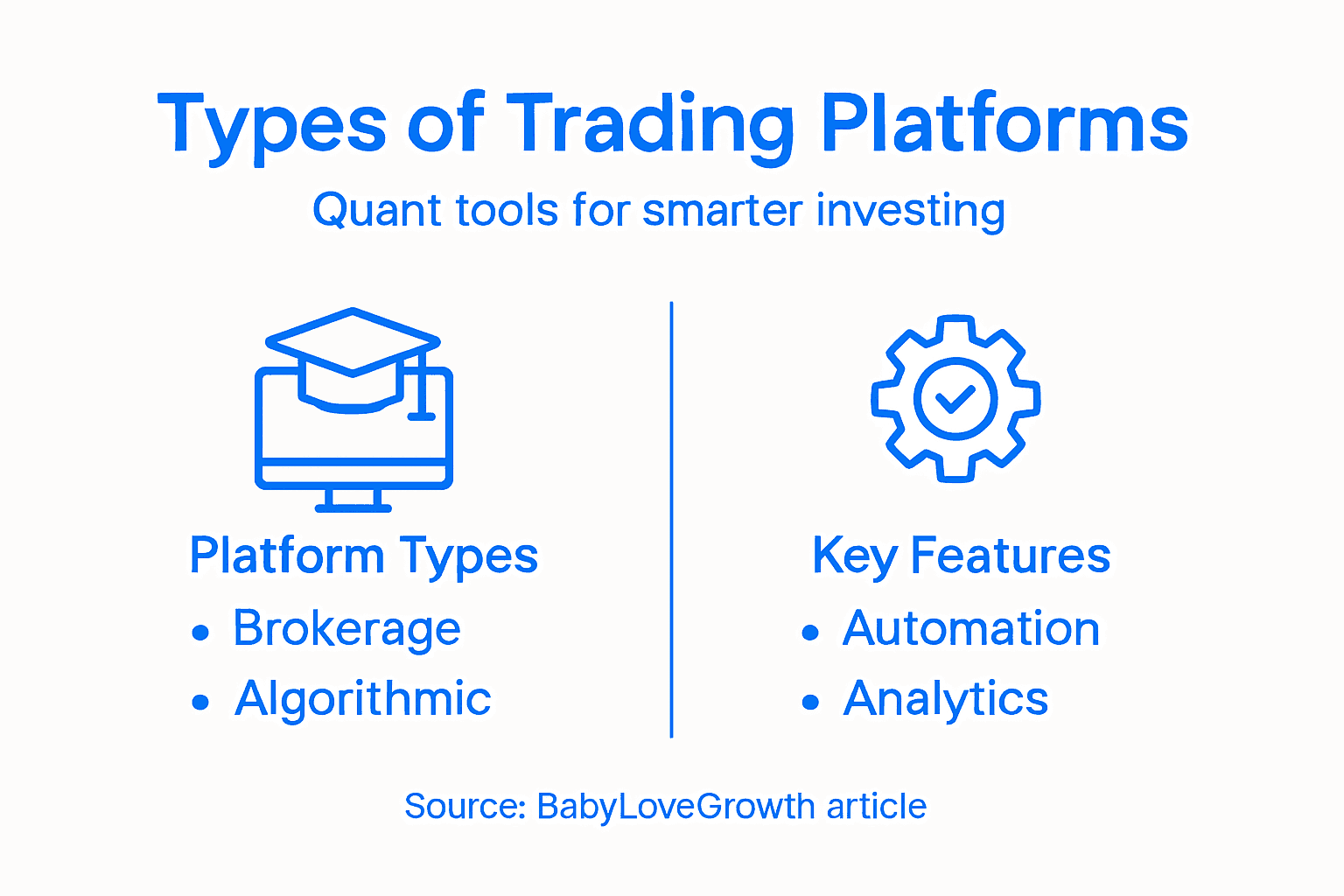
Each platform type offers distinct advantages, allowing traders to select tools that align precisely with their investment goals, technical expertise, and risk tolerance. The evolution of trading platforms continues to democratize financial markets, providing unprecedented access and sophisticated tools for investors worldwide.
Here’s a side-by-side overview of the major trading platform types and their ideal user groups:
Platform Type | Key Audience | Typical Tools Offered | Primary Asset Focus |
Online Brokerage | Retail investors | Portfolio tracker, research | Stocks, ETFs, options |
Direct Access | Professional traders | Low-latency order routing | Equities, derivatives |
Peer-to-Peer | Crypto enthusiasts | Decentralized trade engine | Cryptocurrencies |
Crypto Specialized | Digital asset traders | Secure wallets, analytics | Crypto coins, tokens |
Algorithmic | Tech-driven investors | Automated strategy builder | All major asset classes |
Pro tip: Always evaluate a trading platform’s specific features, transaction costs, and compatibility with your trading style before committing to a particular system.
Core Features: Automation and Analytics
Automation and analytics have revolutionized trading platforms, transforming how investors approach market strategies. Machine learning trading algorithms now enable traders to make more sophisticated, data-driven decisions with unprecedented precision and speed.
Key automation and analytics features include:
Algorithmic Trading Capabilities:
Automated trade execution
Machine learning price prediction
Real-time market signal analysis
Reduced emotional trading interference
Advanced Analytics Tools:
Comprehensive data visualization
Historical performance backtesting
Risk management modeling
Predictive market trend identification
AI-Powered Insights:
Pattern recognition algorithms
Sentiment analysis technologies
Automated portfolio rebalancing
Cross-market correlation detection
Modern trading platforms leverage sophisticated computational techniques to process vast amounts of market data instantly. Automated trading platforms integrate AI-driven analytics that enable traders to develop complex strategies without requiring extensive technical expertise.

The convergence of automation and analytics represents a paradigm shift in trading technology. By eliminating human emotional biases and leveraging data-driven insights, these platforms provide traders with a powerful competitive advantage across diverse financial markets.
Below is a summary of how automation and analytics impact trading performance and risk management:
Innovation Area | Practical Benefit | Impact on Trade Outcomes | Risk Reduction Method |
Automated Execution | Real-time trade placement | Faster reaction to price moves | Minimizes emotional errors |
Machine Learning | Adaptive market predictions | Enhanced strategy precision | Detects volatility patterns |
AI Analytics | Visual and trend analysis tools | Deeper portfolio insights | Flags unusual market shifts |
Pro tip: Continuously validate and refine your automated trading algorithms by comparing their performance against manual trading strategies and market benchmarks.
Integrating Trader Intuition With Algorithms
Trader intuition represents a critical yet often overlooked component in algorithmic trading strategies. Multi-indicator trading strategies demonstrate how computational models can effectively incorporate human insights, bridging the gap between raw data analysis and nuanced market understanding.
Key approaches for integrating trader intuition with algorithms include:
Hybrid Decision-Making Models:
Combine quantitative data with qualitative insights
Weight human expertise alongside statistical predictions
Create adaptive learning frameworks
Balance algorithmic precision with contextual understanding
Machine Learning Integration:
Develop models that learn from trader feedback
Incorporate subjective market interpretations
Create flexible algorithmic architectures
Enable continuous strategy refinement
Expert System Frameworks:
Leverage specialized knowledge domains
Synthesize structured and unstructured financial data
Build interpretable prediction systems
Maintain transparency in decision-making processes
AI-powered trading frameworks now enable sophisticated synthesis of quantitative data with qualitative market insights. These advanced systems can process complex information streams, transforming raw market signals into actionable trading strategies that reflect both computational precision and human expertise.
The future of trading lies in creating intelligent systems that don’t just analyze data, but understand the nuanced context that experienced traders bring to market interpretation. By developing algorithms that can learn from and adapt to human intuition, traders can create more robust, flexible investment approaches.
Pro tip: Regularly document and quantify the intuitive insights that inform your trading decisions to systematically improve your algorithmic models.
Risks, Costs, and Common Pitfalls
Navigating the complex landscape of trading platforms requires understanding their inherent risks and potential financial implications. Online investment platform risks emerge from multiple dimensions, challenging investors to develop sophisticated risk management strategies.
Key risks and potential pitfalls include:
Financial Risks:
Potential for significant capital loss
Margin trading exposure
Leveraged investment vulnerabilities
Unexpected market volatility impacts
Technological Risks:
Platform system failures
Cybersecurity vulnerabilities
Data transmission interruptions
Algorithm execution errors
Behavioral Risks:
Overtrading tendencies
Emotional decision-making triggers
Confirmation bias in strategy selection
Misunderstanding complex financial instruments
Trading platforms often incorporate subtle design elements that can unconsciously influence investor behavior. Default settings, visual interfaces, and notification systems can potentially encourage higher-risk trading activities, making it crucial for investors to maintain critical awareness and implement personal risk management protocols.
Successful trading platform navigation requires a holistic approach that balances technological capabilities with disciplined personal investment strategies. Investors must continuously educate themselves, understand platform mechanics, and develop robust risk mitigation techniques to protect their financial interests.
Pro tip: Always set strict personal risk limits that are more conservative than platform default settings to maintain disciplined investment behavior.
Unlock the Power of Trader Intuition with Cutting-Edge Automation
The article highlights a major challenge traders face today: bridging the gap between complex algorithmic strategies and the intuitive insights that experienced traders rely on. It acknowledges that while automation and analytics have transformed trading, many platforms lack the ability to truly comprehend the nuance of human intuition, leaving investors struggling to fully harness their edge. Pain points include difficulty integrating subjective market readings into quantitative models and managing emotional biases while executing sophisticated strategies.
At NvESTiQ, we have solved this exact problem by creating the world’s first platform that understands and quantifies a real trader’s intuition. Our technology allows you to seamlessly tie simple conversations and intuitive insights into a proven, quantifiable trading advantage. Instead of wrestling with complicated code or incomplete algorithms, you can unlock a true quant edge today.
Experience how merging human expertise with advanced automation can elevate your trading beyond conventional limits.
Discover this innovation now on our platform and start turning your intuition into actionable strategies.
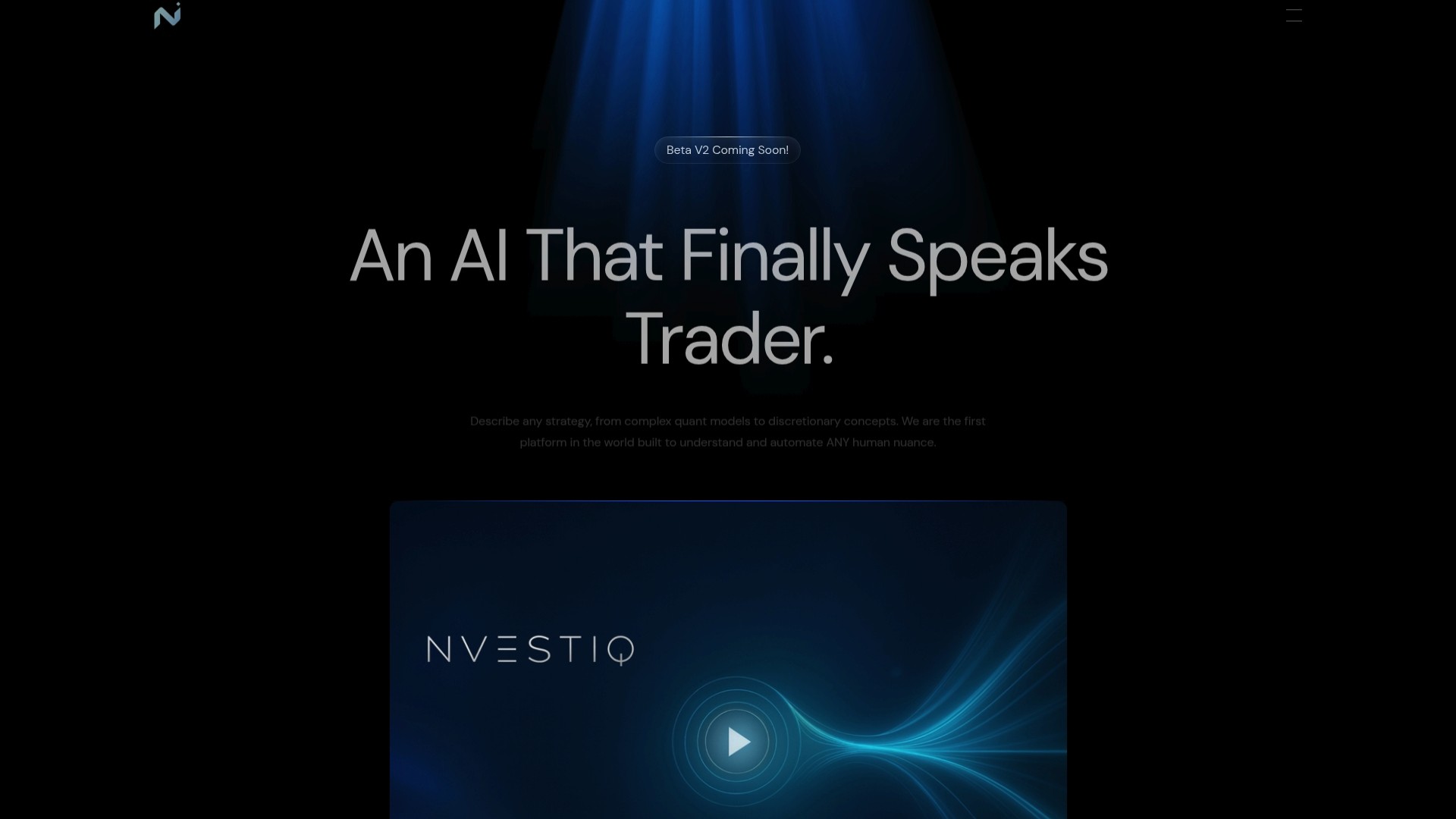
Don’t settle for generic trading tools that miss the subtlety you bring to the markets. Visit NvESTiQ and harness the future of trading platforms that finally get what it means to think like a trader. The next market opportunity waits for no one act now and join the revolution.
Frequently Asked Questions
What is a trading platform?
A trading platform is a digital system that allows investors to execute transactions, analyze market data, and manage investment portfolios efficiently, providing tools for real-time data, charting, and order execution.
How do I choose the right trading platform for my needs?
Consider factors such as your trading style, asset focus, platform features, transaction costs, and user experience. It’s beneficial to test different platforms using demo accounts before making a decision.
What are the main types of trading platforms available?
The primary types of trading platforms include online brokerage platforms, direct access trading platforms, peer-to-peer trading platforms, cryptocurrency specialized platforms, and algorithmic trading platforms, each catering to different trader requirements.
How can automation and analytics improve my trading performance?
Automation and analytics enable quicker trade execution, data-driven decision-making, and help reduce emotional trading biases, allowing traders to develop complex strategies and improve risk management capabilities.